
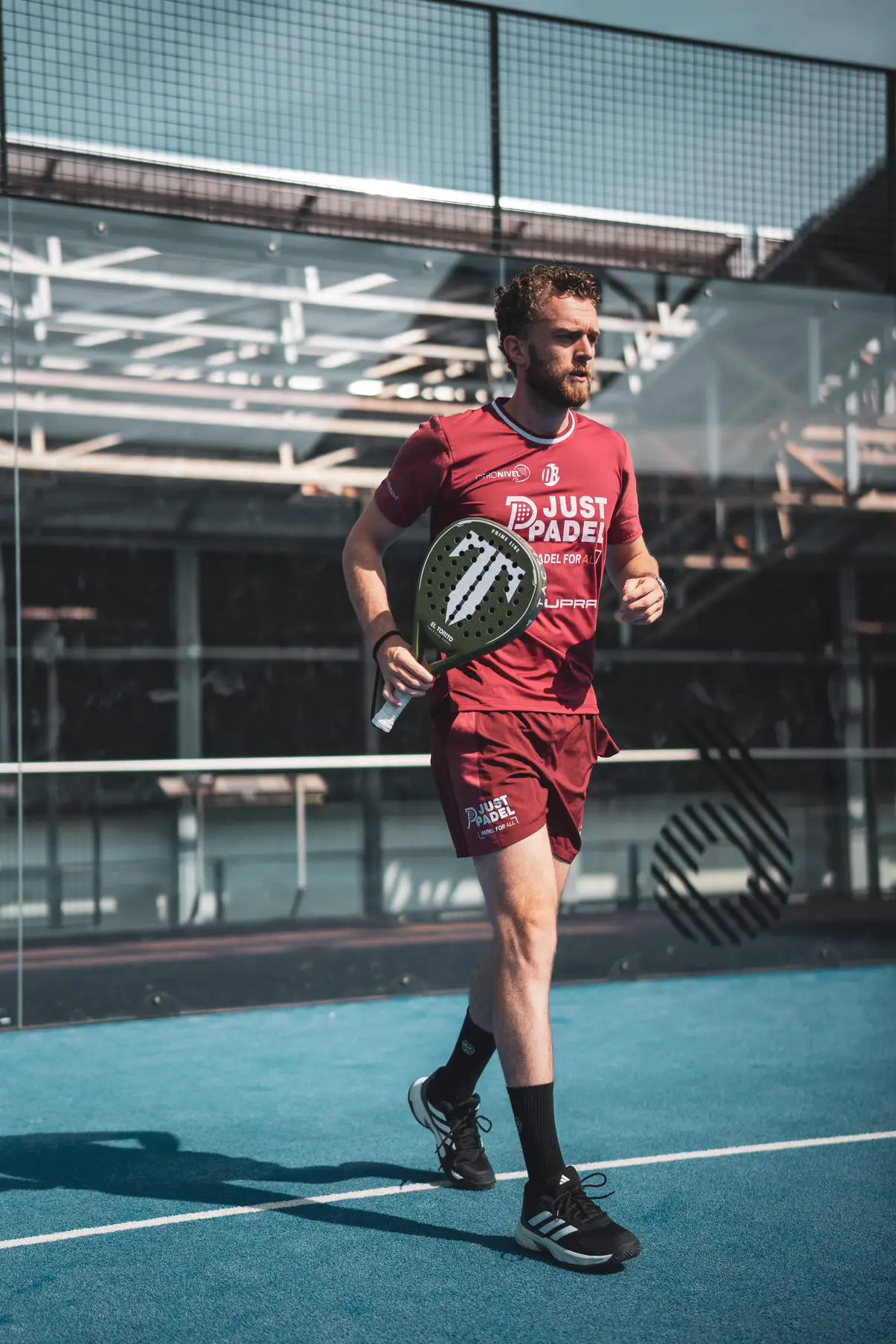
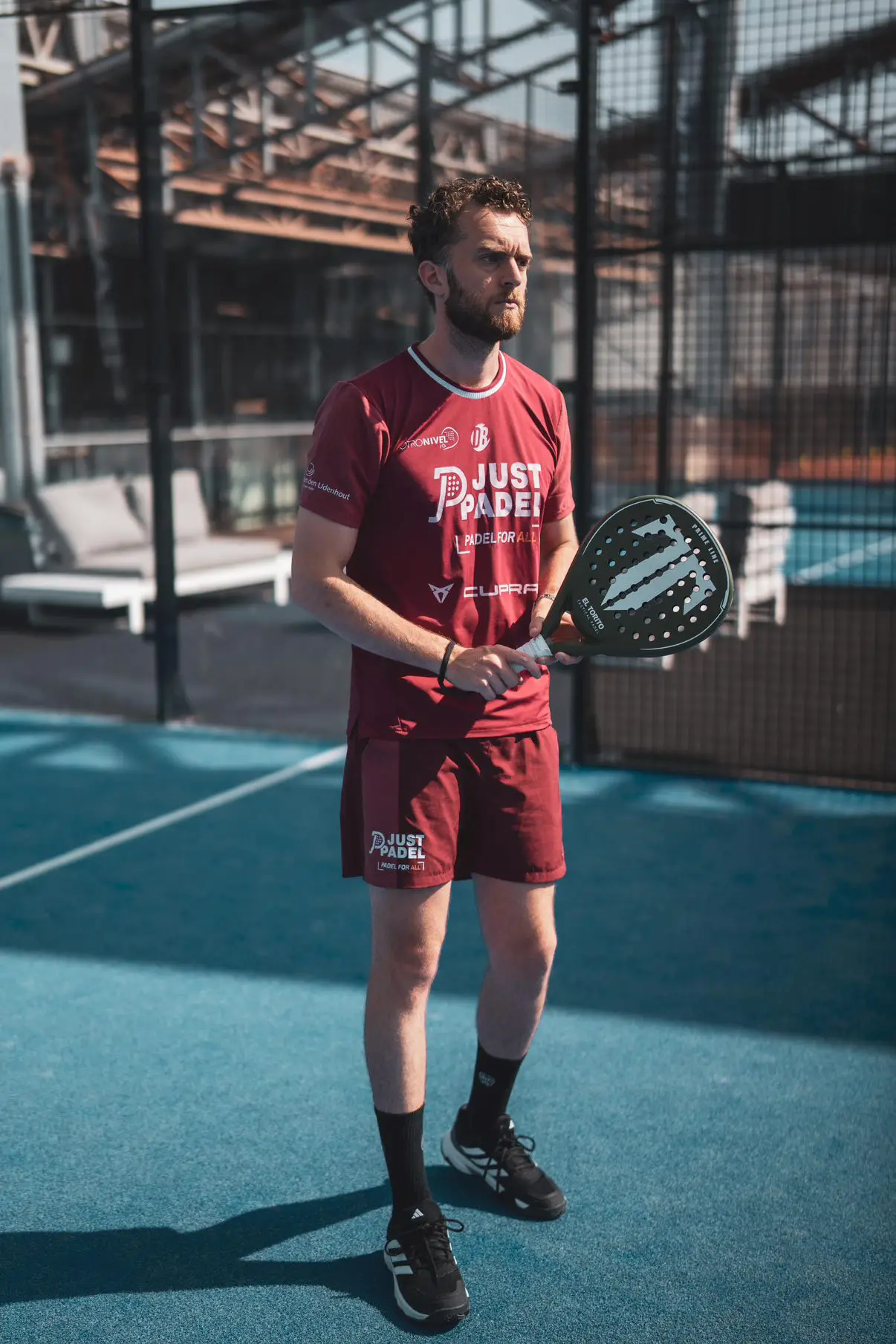
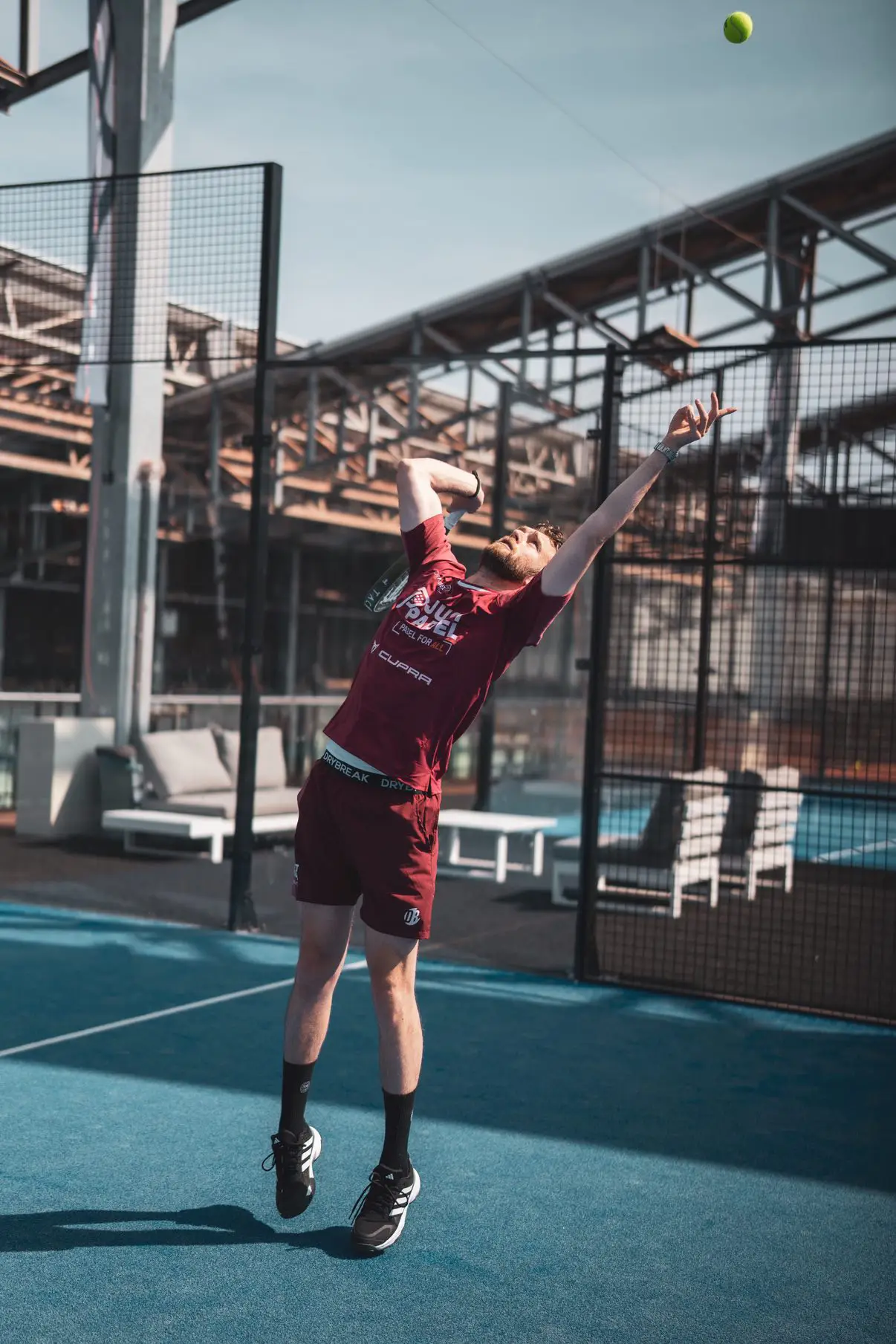
COACH SPOTLIGHT:
SVEN BOELE
- Favourite Shot: Backhand Wall Return
- Sven Boele
How did you first get started in padel, and what’s your story?
I originally started out in tennis and later worked as a tennis coach. I always knew I wanted to teach and help people improve, but I didn’t want to be stuck in a classroom or behind a desk. I wanted something active, social, and fun.
I discovered padel almost by accident. During a fun activity with a group of tennis coaches, we tried padel together, and that was my first real introduction to the sport. Not long after, I switched jobs and became head coach at another club. At that time, padel was still very new in the Netherlands — we were working at one of the first padel clubs in the country, probably the fifth or sixth one.
The owner told me: “Sven, just start playing with people. Invite them, play with them, and let’s see if padel works here.”
So that’s exactly what I did. I played padel with everyone. I invited the entire club to play with me, and very quickly I became completely hooked.
Because padel was still new, I naturally started promoting it a lot. I played tournaments, trained more and more, and improved quickly. I was one of the younger players in the Netherlands to fully commit to padel at that time. Eventually, an opportunity came up to play the World Cup in Paraguay, which was a huge moment for me.
One experience there really stuck with me. I was ordering a drink, and right next to me was Paquito Navarro. He was incredibly relaxed, friendly, and completely without ego. Coming from tennis — which can sometimes feel stiff or ego-driven — padel felt completely different. The atmosphere was open, social, and welcoming, and the best players in the world were genuinely nice people. That culture made a big impression on me.
After that, I stopped playing tennis altogether and moved to Spain for two years to fully learn the game, understand the tactics, and absorb the padel culture.
During COVID, I was coaching in English in Marbella and many people were frustrated because they couldn’t train or play. I started making simple videos about what you could still do — on your balcony, in your garage, or in your living room — to stay active and healthy. Those videos started to resonate.
At the same time, there was a padel court in the urbanisation where I lived that I could use for free. It was literally in my garden: a full glass court with decent turf. Some of my very first YouTube videos were filmed there. Looking back, it was a pretty insane and funny setup, but it played a big role in how everything started.
Today, that journey has led to a community of nearly 70,000 subscribers, where my focus is still the same: helping players understand padel better, enjoy the game more, and make smarter decisions on court.
What’s your best advice to beginner padel players?
Don’t start by focusing on technique — that comes later.
Most players step onto the court without a game plan and assume tactics are too complicated for them. In reality, understanding positioning and simple tactical ideas is what makes padel more fun and easier.
Focus first on where to position yourself: when to be at the net, when to stay at the back, and how to move together with your partner. That cooperation is one of the most important parts of the game.
For example, when you’re at the net, there’s a reason you play many balls cross-court and into the corners. It gives you more margin, more control, and makes it harder for your opponents to apply pressure.
Once you start playing with a basic game plan, you enjoy padel more because you understand what you’re doing — and learning the game that way is one of the most rewarding parts of padel.
For other coaches who want to produce high-quality content for social media – like yours – what are your top tips?
Be authentic and educational, not promotional. Focus on solving real problems players have on court, keep your message simple, and be consistent. Content works best when it genuinely helps people play better, not when it’s about showing how good you are as a coach.
In your opinion, how does one build a strong padel community?
By creating environments where players feel understood rather than judged. I try to connect people through shared learning, open conversations, and practical education — whether that’s through videos, events, or collaborations. A strong padel community grows when people feel they’re improving together.
What are your priorities for 2026, and what are you most excited about?
My main priority is continuing to build long-term projects that combine education, content, and community. In 2026, I want to experiment more with different content formats and upload more consistently, while staying true to the way I teach and explain the game.
Viewers can expect more long-form, raw racket reviews, which I plan to upload on Fridays. These will be more in-depth and honest, focused on feel, playability, and who a racket is really for. My regular padel tips will continue on Mondays, as that structure works well for my audience.
I’m also planning to create more analysis videos of players on my YouTube Members channel. I really enjoy breaking down matches and receiving direct feedback and questions from members — that interaction adds a lot of value for both sides.
In addition, I’ve started developing courses on the Members channel. We recently launched a Vibora course, designed as an active learning format where players can ask questions during the course. That allows me to adapt the content, respond to feedback, and make the learning process more interactive and practical.
Overall, I’m most excited about building deeper engagement with players who genuinely want to learn and improve, and creating content that helps them understand padel on a deeper level.
Share the Post: